
Niels Sonne-Frederiksen
Niels Sonne-Frederiksen is a Danish architect renowned for creating extraordinary educational environments that blend organic architecture with anthroposophical principles. His work transforms schools and kindergartens into “fairy tale homes” where children can thrive in spaces that feel alive and magical.
Career & Philosophy
Beginning his career in the late 1970s with color and interior design consultancy for educational institutions across Europe, Niels transitioned to architecture in 1980 when he joined the office of Erik Asmussen in Sweden. Over 13 years, he developed expertise in designing Waldorf schools and kindergartens, eventually becoming responsible for numerous projects throughout Germany and Scandinavia.
His architectural philosophy is deeply rooted in the understanding that children perceive buildings as living beings. “Children consider their toys, furniture, tables and chairs as living beings, just like people,” he explains. “They perceive buildings the same way.” This insight guides every design decision, from the organic forms and unusual windows to the carefully chosen colors and natural materials.
Architectural Approach
Niels’s buildings are characterized by:
- Natural Materials: Only ecological materials are used, with wood predominating and living grass roofs that produce abundant oxygen
- Organic Forms: Buildings feature flowing, sculptural shapes that avoid rigid geometry
- Integrated Nature: Schools include ponds with fish, orchards, vegetable gardens, beehives, and even farm animals on campus
- Community Spaces: Projects create village-like environments with features like “Curved Street,” “Street of Craftsmen,” and “House on the Lake”
- Participatory Design: Children are involved in the design process through workshops where they can draw and discuss their ideas
Influences
Three architects profoundly shaped Niels’s development:
- Erik Asmussen (1913-1998) - His Danish mentor and employer for 13 years, a master of anthroposophical architecture known worldwide
- Imre Makovecz (1935-2011) - Hungarian architect whose approach was “the absolute opposite” of Asmussen, providing valuable contrast
- Rudolf Steiner - Though not an architect, Steiner’s buildings in Dornach, Switzerland, created about 100 years ago, offered foundational inspiration
Niels describes the polarity between Asmussen and Makovecz as illuminating: Asmussen’s buildings are like “eyes looking toward the sun and the future,” emphasizing light flowing through windows and activating colored glazes, while Makovecz’s are like “great listening ears turned toward the earth,” connecting deeply with a place’s history and geography.
Major Projects
Notable works include:
- Rudolf Steiner School Düsseldorf (1980-2002) - A complete campus with kindergarten, school, shops, theater, lake with carp, vegetable gardens, and beehives. Features the iconic “House on the Lake” and distinctive colored window frames
- Waldorf Schools in Hannover-Bothfeld, Kiel, Stade, and Sorsum, Germany
- Kindergartens in Fredrikstad and Ås, Norway; Leer and Aschaffenburg, Germany
- Kindergarten at Rudolf Steiner School Düsseldorf (1995)
- Hall Building at Rudolf Steiner School Düsseldorf (2002)
His Aschaffenburg kindergarten project features a playful tower designed as a corner column with arms, mouth, eyes, and a hat that children can climb and use for imaginative play.
Design Philosophy: From Womb to Society
Niels articulates a profound theory of children’s spatial needs:
“When a child is born, they still feel most comfortable in the state they were in before—as if wanting to remind everyone: ‘Don’t forget where I came from!’ We call such spaces in architecture the ‘womb.’ Hungarian architect Imre Makovecz called it ‘minimal personal space.’”
This “womb” pole represents family, home, and shelter—the trunk of society’s tree. The opposite pole consists of functional spaces—workshops, forges, theaters—the branches and leaves reaching toward the future. “In life, you move from the ‘womb’ to functional spaces, transforming from a small child into an adult.”
He notes that everyone goes to school three times: as a child discovering the world, as a parent supporting their children, and as a grandparent enjoying their grandchildren’s experience. “School is the connecting link between family and the larger society. It is the heart of society, which also needs development. That’s why we must build with great love.”
Collaborative Approach
Niels views the relationship between client, architect, and project through an evocative metaphor: the architect is like a woman who can give birth to a child—the only one who can design the new building. The client provides the initial impulse and supports the process, while the architect brings the vision to life.
He emphasizes the importance of beginning each project by visiting the site: “I must be inspired by the space. This is the foundation of the future project. I study the terrain, soil quality, observe where and how trees grow—everything matters in developing the project.”
Furniture & Craft
Beyond architecture, Niels designs and builds custom furniture, particularly for children. Working in a small carpentry workshop in the Swedish office, he creates wooden figures, toys, and chairs as gifts for friends and their children, personally painting each piece.
Legacy
His buildings create environments where children can develop as “full members of society.” At the Düsseldorf school, children don’t need to travel to the countryside to experience nature—they can feed carp during breaks, tend gardens, and buy fresh vegetables and berries at the school shop after classes.
“When you see that everyone is happy, you understand that it was worth creating the project,” Niels reflects. “And this gives strength to continue working.”
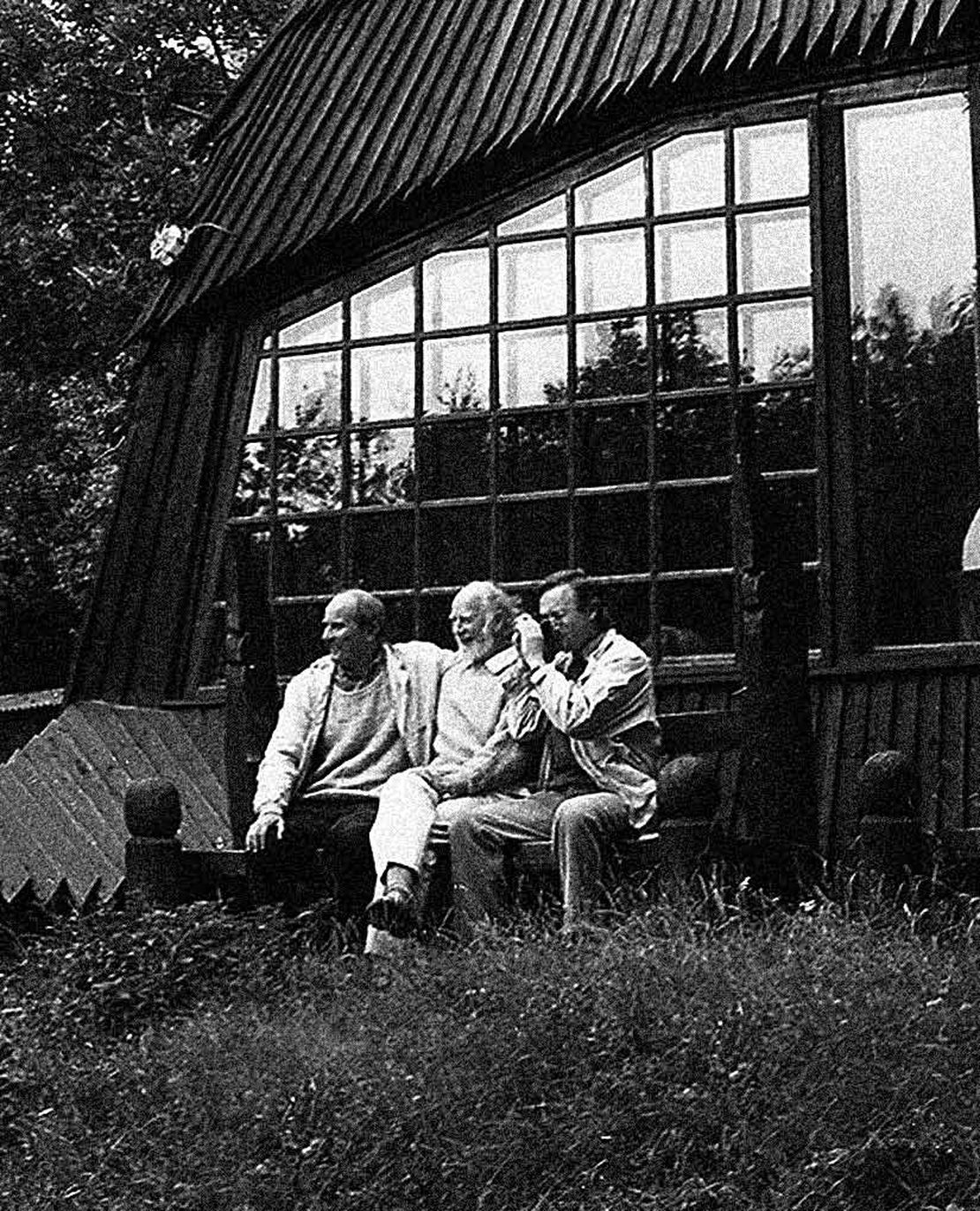
ABBI / IMRE
Ein Artikel für die Zeitschrift Országépít? über Erik Asmussen und Imre Makovecz. link zur ungarischen PDF Version hier.
Read More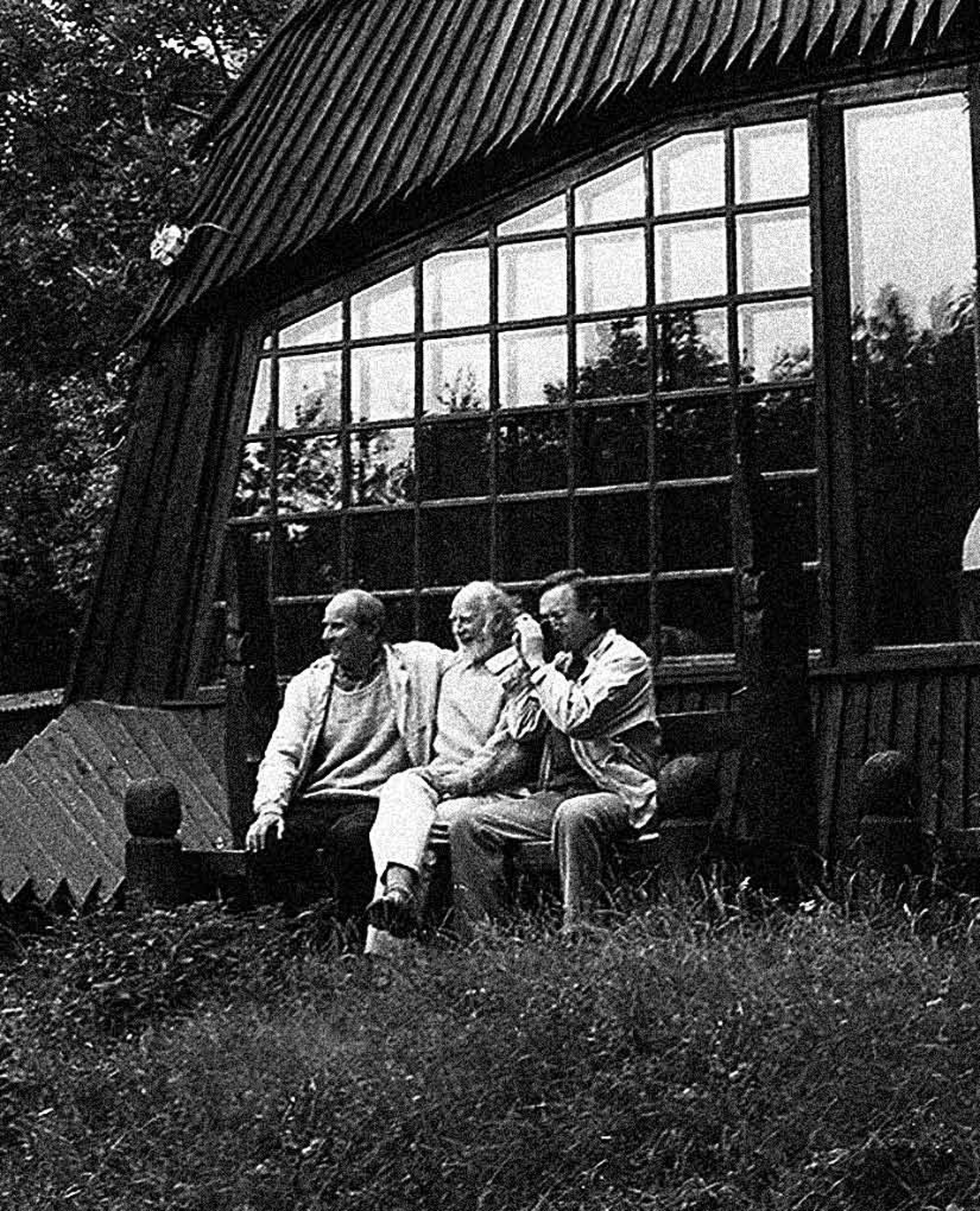
Száz éve született
SZÁZ ÉVE SZÜLETETT ERIK ASMUSSEN ERIK ASMUSSEN (1913-1998) és MAKOVECZ IMRE (1935-2011) Nils Sonne-Frederiksen
Read More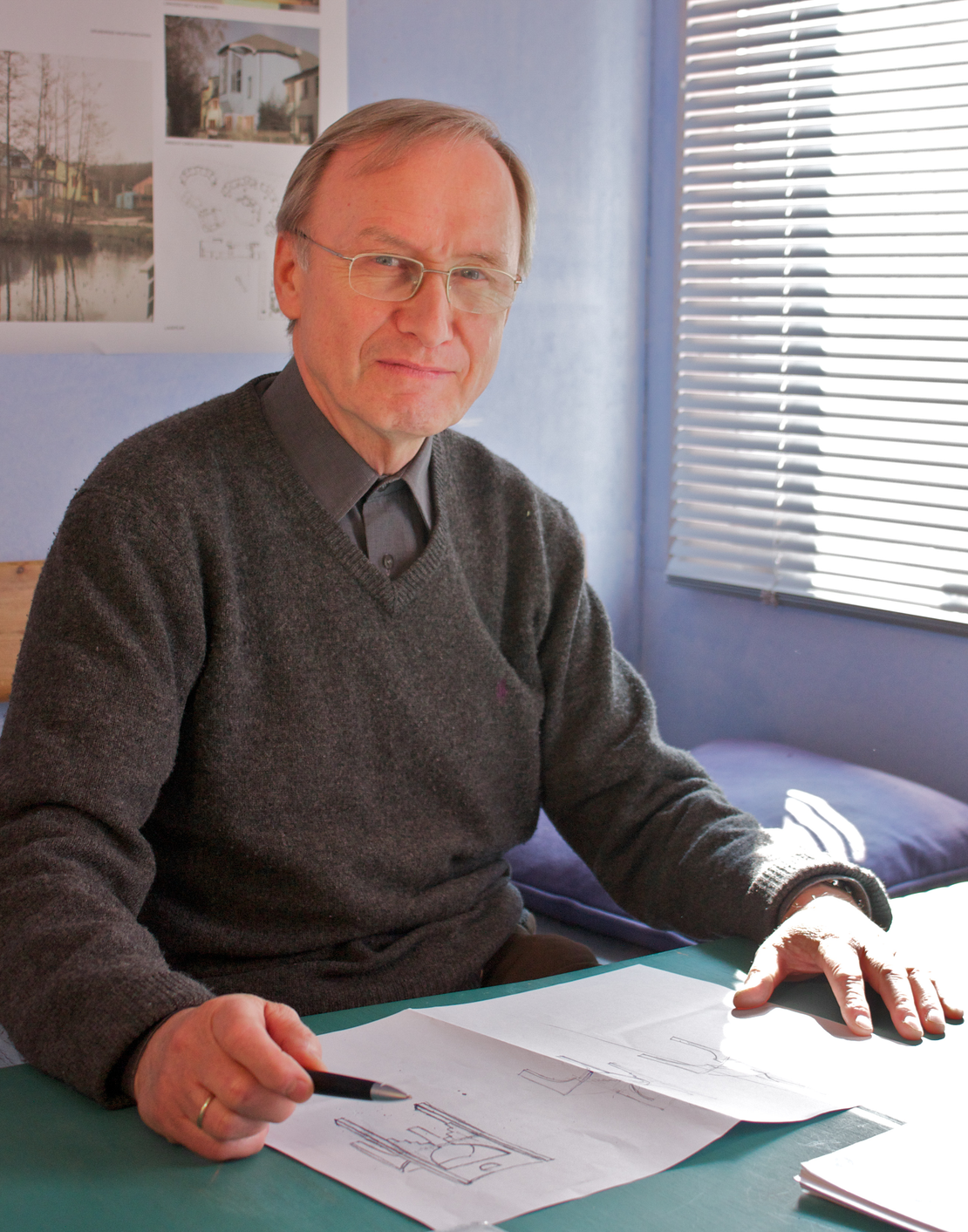
Королевство для сказок
КОРОЛЕВСТВО ДЛЯ СКАЗОК Датский архитектор Нильс Зонне-Фредериксен проектирует удивительные детские сады и школы. Это не просто здания, а настоящие сказочные домики с необычными стенами, окнами, крышами. Он строит для детей маленькие города, где есть, например, Кривая улица, Улица мастеров, Дом на озере. Интервью: Ольга Гладуш. Фото: предоставлены архитектором.
Read More